When are you strong enough after ACLR? What do you tell your patients when they ask?
After attending another great Sportskongress, there was a lot of focus on LSI not being predictive for secondary ACL injury. However, no one could answer the question: when is someone strong enough? What are the goals? What do you tell the patient? Many RCTs have also found a beneficial effect of one treatment compared to another, but forgot to mention that both groups were either still weak or strong.
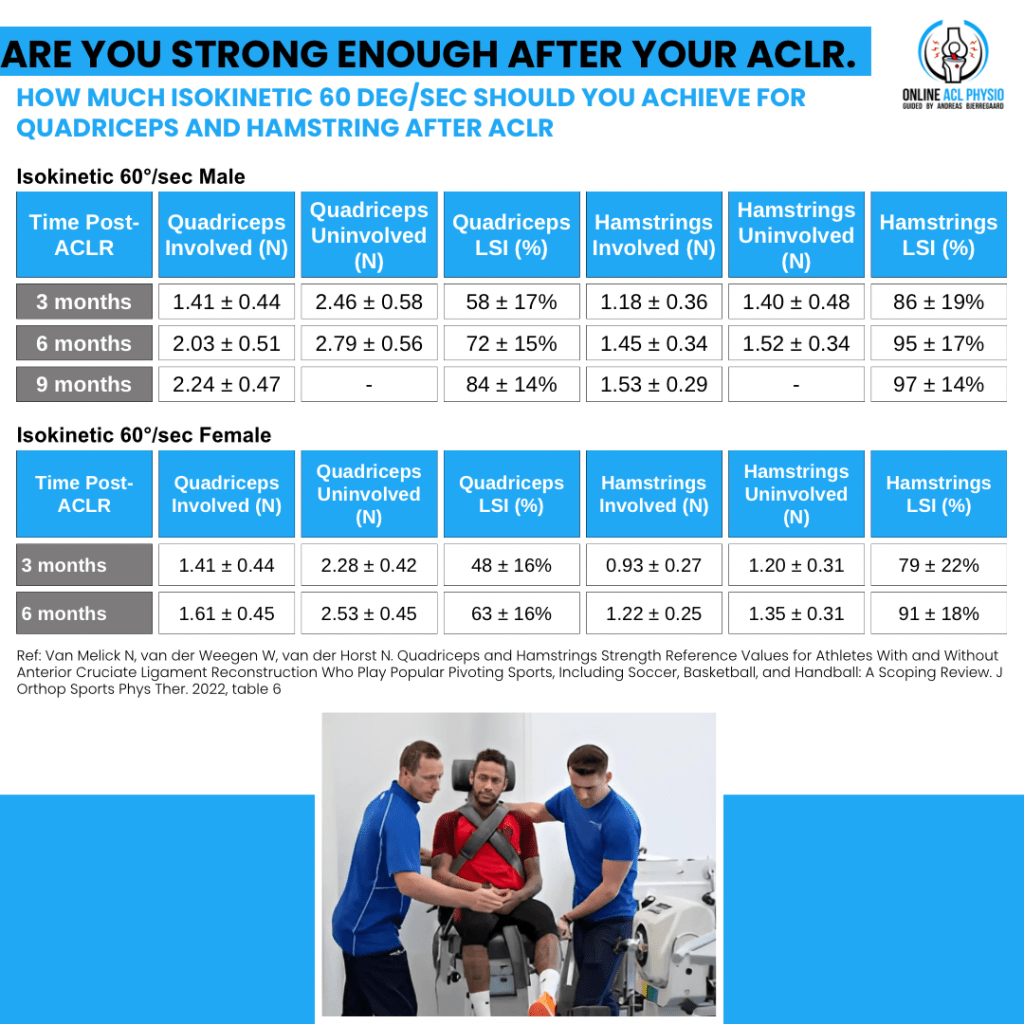
Van Melick and colleagues tried to answer this question by conducting a scoping review on “Quadriceps and Hamstrings Strength Reference Values for Athletes With and Without Anterior Cruciate Ligament Reconstruction Who Play Popular Pivoting Sports, Including Soccer, Basketball, and Handball.
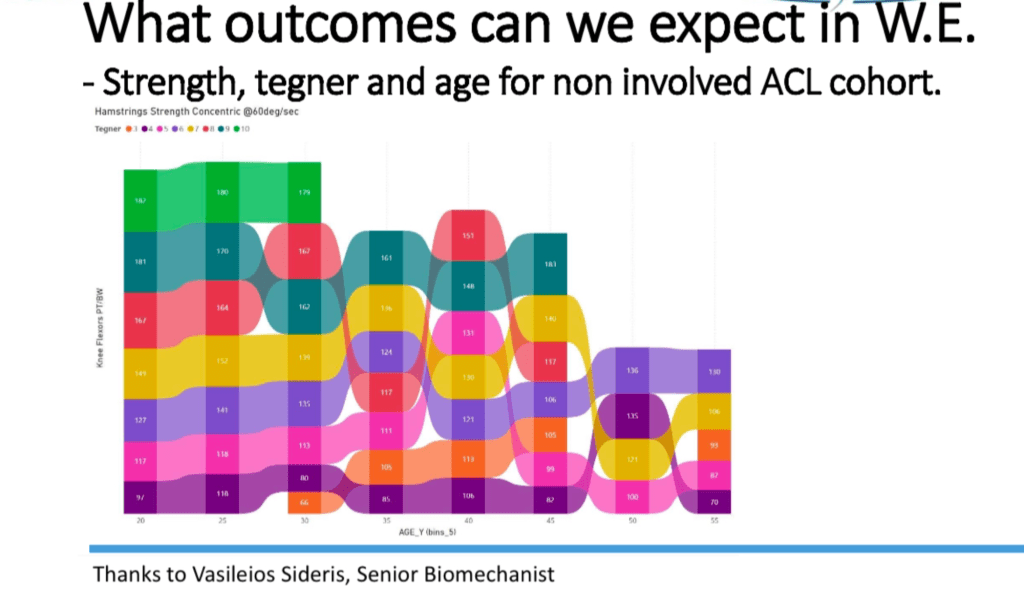
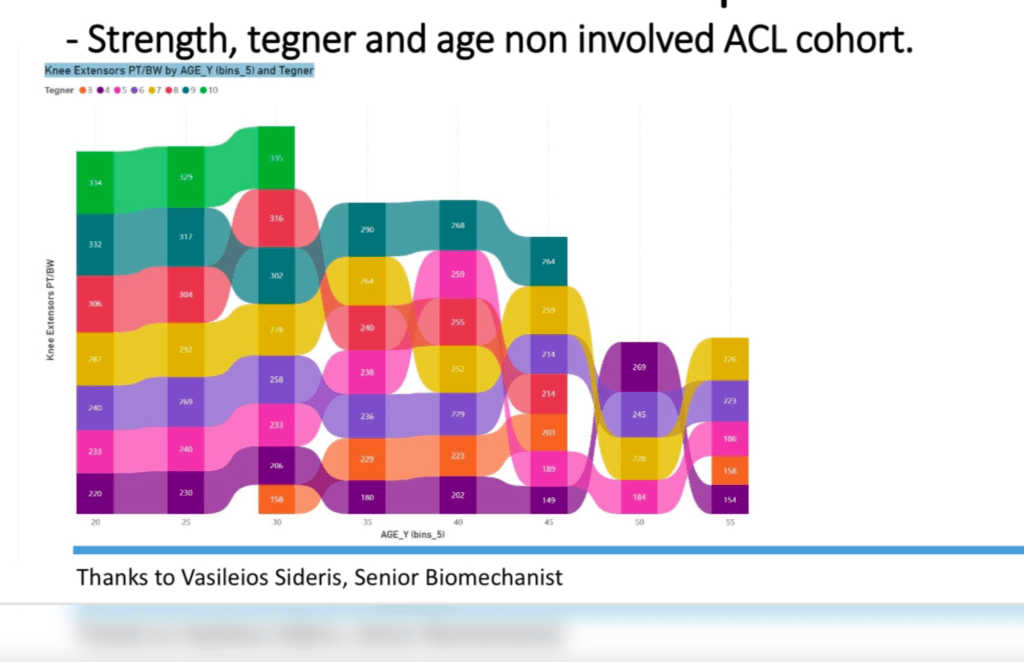
Similarly, results were presented at the World Physiotherapy Conference in 2022, where results from Aspetar cohort looked at quadriceps and hamstrings strength every 6 weeks up to 9 months post-op.
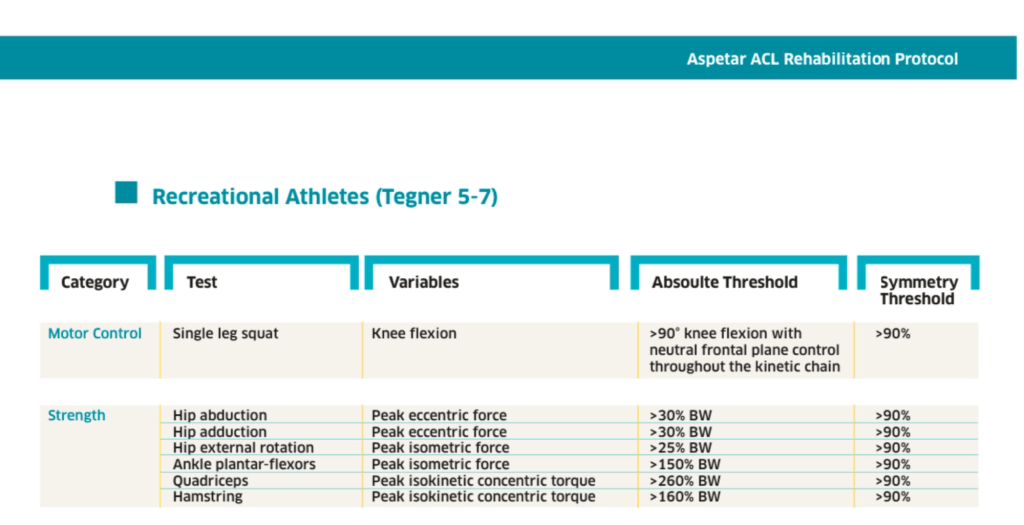
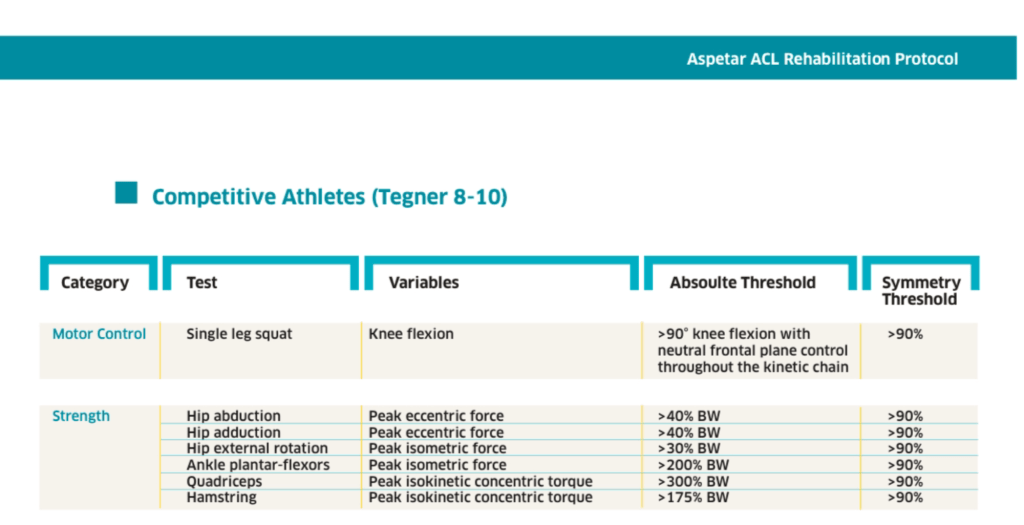
In the Aspetar ACL Protocol, it is also suggested that athletes (Tegner scale 8-10) should achieve Peak Isokinetic Concentric Torque > 300% BW for the quadriceps and > 175% BW for the hamstrings, while non-athletes (Tegner scale 5-7) should achieve Peak Isokinetic Concentric Torque > 260% BW for the quadriceps and > 160% BW for the hamstrings.
Another relevant factor besides the Tegner scale is age. We see a drop in strength when stratified by age.
Question:
A patient comes in and tells you he has been measured at 2.0 quadriceps BW/Nm and 1.3 hamstrings BW/Nm with a limb symmetry index of 10%. What will you tell the patient?