My Top Read of the Month:
An Evidence-Based and Mechanistic Approach to Reducing the Risk of Anterior Cruciate Ligament Injury
Collings TJ, Diamond LE, Barrett RS, et al. An Exercise and Sport Science Australia Position Statement. Sports Medicine. 2026.
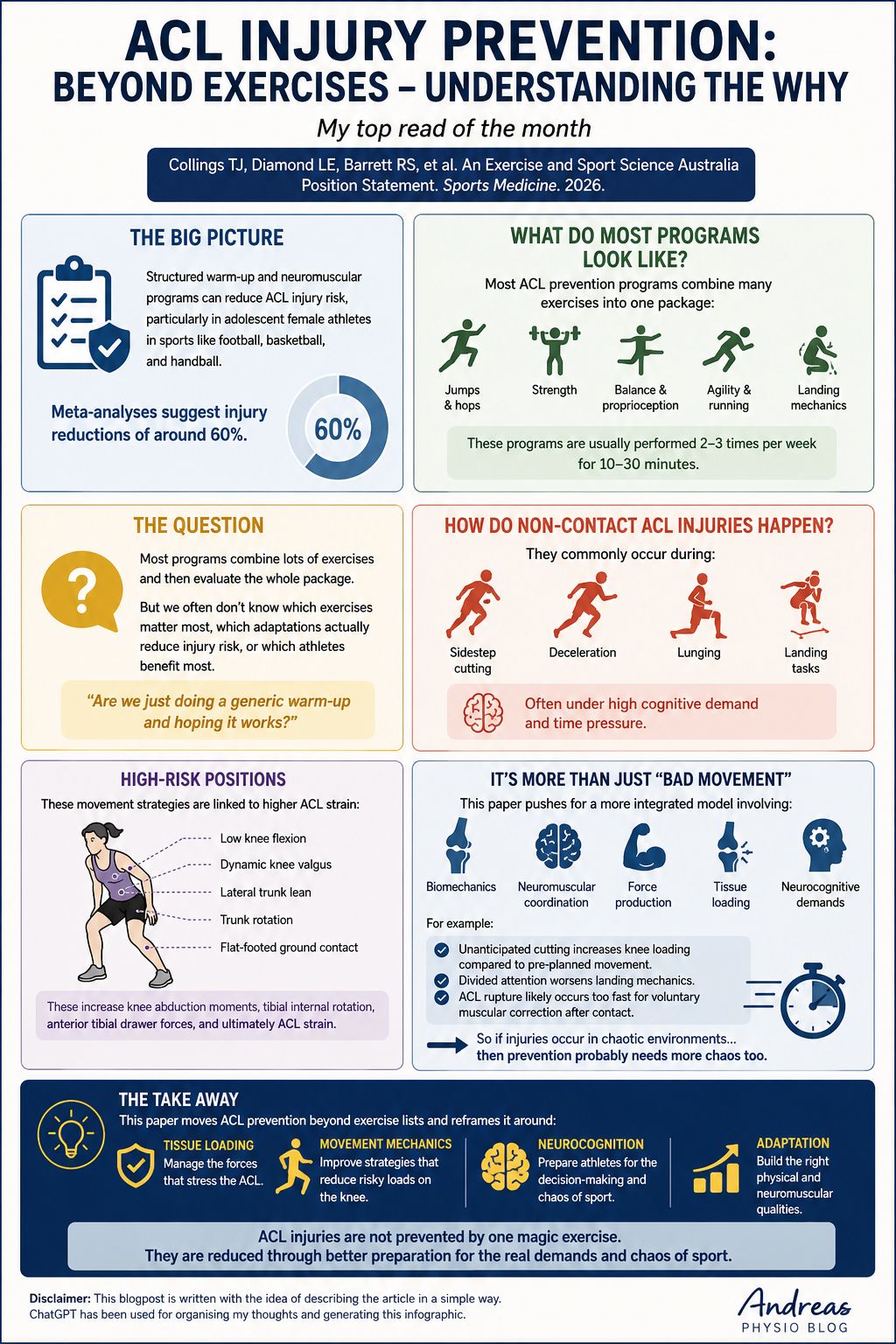
Disclaimer: This blogpost is written with an idea to describe this article in a simply way: Chatgpt has been used to organising my thoughts and generate an infographic
Have you ever had a coach who used some sort of injury prevention program with you?
Especially football and handball players have probably tried prevention programs like FIFA 11+, Knækontrol, Nordic hamstring protocols, or some version of a neuromuscular warm-up.
Most of these programs are built around the same exercises: jumps, hops, balance drills, lunges, planks, running drills, landing mechanics, and agility work.
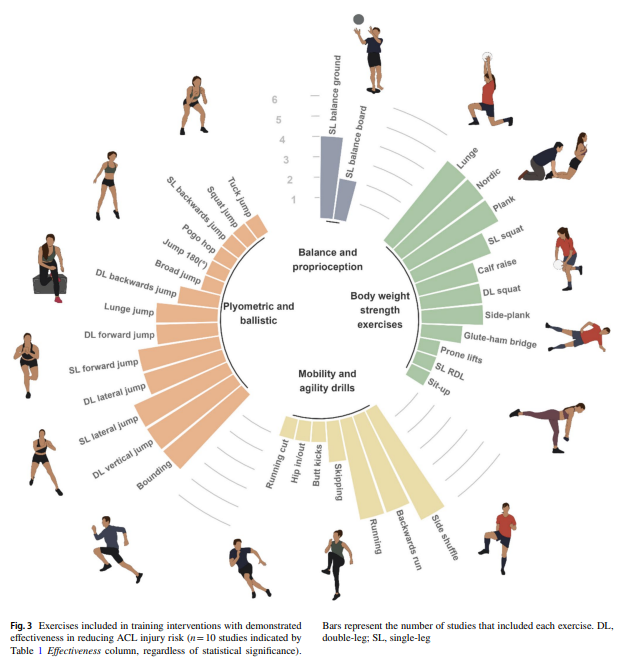
“Do these exercises decrease ACL injury risk?”
This new study confirms what most clinicians already know: structured warm-up and neuromuscular programs can reduce ACL injury risk, particularly in adolescent female athletes participating in sports like football, basketball, and handball. Meta-analyses suggest injury reductions around 60%.
Why do these programs work?
Because most ACL prevention programs combine many different exercises into one package and then evaluate the whole intervention. That means we often do not actually know which exercises matter most, which adaptations reduce injury risk, or which athletes benefit from which intervention.
The paper outlines how non-contact ACL injuries commonly occur during sidestep cutting, deceleration, lunging, and landing tasks — often under high cognitive demand and time pressure.
The classic high-risk positions include low knee flexion, dynamic knee valgus, lateral trunk lean, trunk rotation, and flat-footed ground contact.

Future recommadations