

Physical activity during my wife’s pregnancy – the dad perspective.
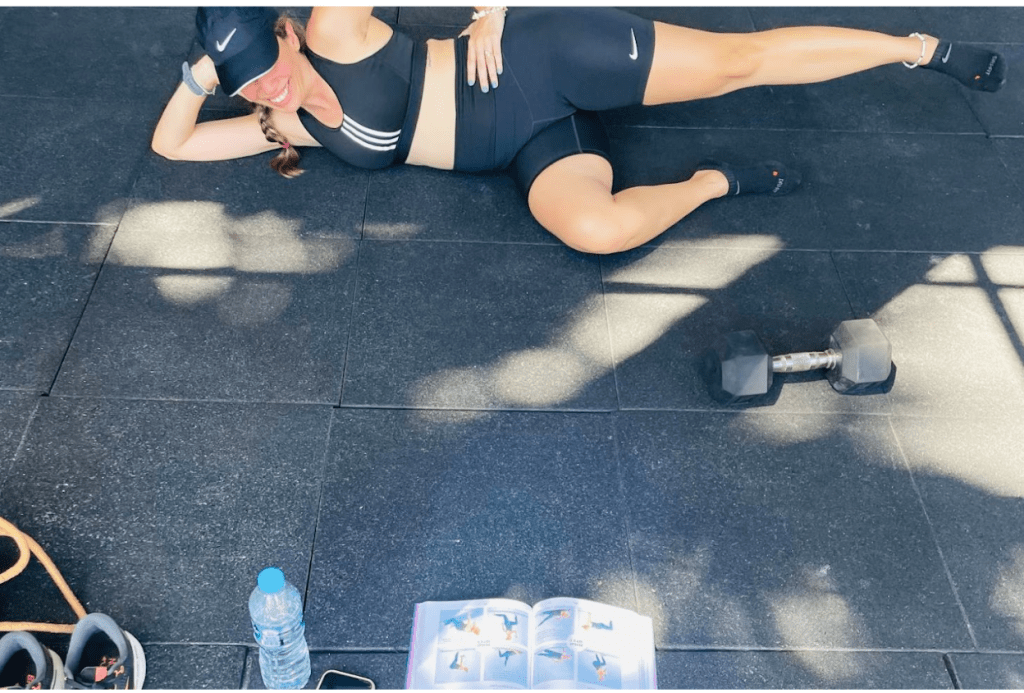
With my new title as “Dad/far/Papi” and speculating on how to kickstart my own training routine again, I reflected back on some of the notes I took in my wife’s pregnancy. Having a pregnant wife is a time of happiness and excitement, but for us also a period of apprehension and concerns.
As many other pregnant women (couples) before us, my wife and I had several conversations about whether my wife should continue to exercise while pregnant and to what extent the intensity should be. Many of these conversations were initiated by comments, things we read, and our own expectations. During my wife’s pregnancy, and even before conceiving, we received many doubtable and unsolicited advice from different areas. Luckily for this post I wrote them all down.
On the one hand, many people have emphasized how important being active is during pregnancy and that it is associated with pre-, peri-, and postpartum health benefits for both mother and child. However, on the other hand, as many people told us, take it easy and rest.
My wife felt left in the middle between doing nothing and overdoing it, especially in the first trimester where we have been told to take it easy. As a physio it made me wonder. What is it about all that advice? Is exercise really important? Or dangerous? Or both?
Both family, friends and social media were constant sources of information and opinion about exercise, nutrition, and gestational weight gain comments.
I do recognise that there are many good social media platforms for advice that offer social support, and the feeling of being connected with other women who are going through the same experience. I’m also aware that it has been shown that these SoMe platforms can have potential to positively influence attitudes and practice of exercise and other health behaviors. For example, my wife has been very happy to use apps and Facebook groups with moms from all over the world to ask questions and share experiences.
However, the same sources could also be barriers to being physically active, engaging in exercises and having healthy nutritional habits during pregnancy if they are communicated with negative attitudes and concerns about the risks of harm to the pregnant or the baby.
To begin with, my wife read so much information that it almost led us into paranoia about nutrition and exercise.
Especially on Instagram, there were so many “influencers” claiming things without declaring if their posts were sponsored or linked to other sorts of advertising or marketing.
We were often told that special considerations had to be taken when IVF treatment was done. There were so many comments about if my wife did exercise it could lead to losing the baby. We should consider that the fertilized egg was like an apple that could fall down from the tree if she was jumping, dancing or running. So the zumba in front of the TV stopped really quick. We were also told not to move because the placenta was low, and she had a small hematoma in her first trimester. Therefore it was best to rest. Especially this word REST, it was often presented as my wife should be lying in her bed without moving. And she is a preschool teacher. Impossible.
We also meet concerns about strength training as lifting could cause stress to the pelvic floor which could increase Urinary Incontinence (UI).
However, a recent cross-sectional survey (Wikander, 2021) among 480 competitive women powerlifters showed that the prevalence of UI was only at the upper limit experienced by women in the general population (listen more to that study in this Podcast)
Also, according to a study by Marcin et al., 2017, up to 45% of women may experience urine incontinence during the postpartum period. They also reported that frequent pelvic floor exercises were found to decrease the UI throughout pregnancy and after giving birth. This was even associated with reported higher scores in quality of life. Instead of rest, the message should be pelvic floor exercises.
Weight gain during pregnancy.
It is encouraged to have a healthy weight gain during pregnancy. We often meet a general belief that exercise may contribute to concerns about controlled weight gain during pregnancy (Bø 2016).
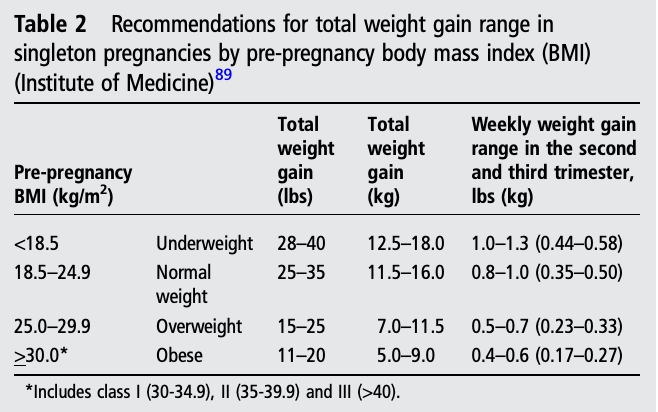
On average, women who exercise while pregnant can have potential benefits. A systematic review (Hay-Smith et al., 2009) on exercise programmes summarized effects on other things like baby size, preterm birth, etc. The overall conclusion was that we don’t know much as the included studies are small with low methodological. However, exercise doesn’t seem to have much of an impact on anything. No change in pre-term birth, or gestational age, or rate of Caesarean section, or foetal growth. So yes, no reason to start exercising in pregnancy, however also no reason to stop exercising. Same conclusion was found among 1657 pregnant Australia womens (Beetham, et al, 2022). There was no association of Physical Therapy in any trimester with infant birth weight, prematurity, gestational diabetes, hypertension or antenatal depression. However, there was a tiny difference in reduced incidence of antenatal anxiety for those women who did low to moderate physical activity during pregnancy.
So again, my conclusion above is to not freak out if you do exercise or if you don’t. However, we were told to rest, as we had a low placenta. This advice could in my opinion have been modified.
Swimming and pregnancy
At around 30-31 weeks, my wife and I went on a postponed honey/babymoon to Bali. However, even before traveling we were told to have precautions if going to the pool or sea because of infection or risk of falling. Furthermore, we were told to avoid boats because of balance or sea sickness. So no snorkeling on our babymoon. Again this advice of no swimming was contradictory as we were also told swimming is good because of its buoyant effects was recommended as the best exercise during pregnancy.
However, if we were thinking of swimming we were advised against using the spa or heated jacuzzi because of the heated temperature and the jacuzzi massage jets could trigger an early delivery. So no snorkeling, spa, no jacuzzi experience on our babymoon. That made it easier to choose a cheaper hotel.
Recommendations for Physical Activity and Exercise During Pregnancy:
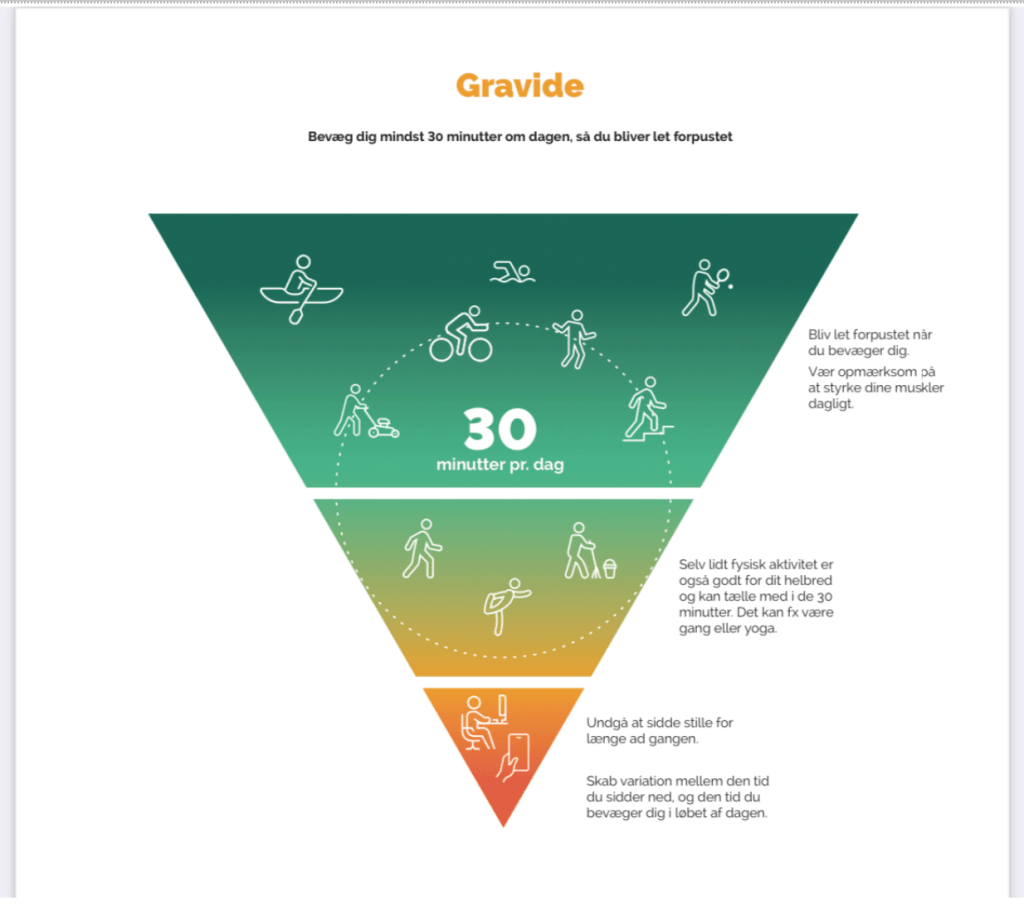
As a Danish citizen I often double check statements with our own national health guideline. According to recent Danish guidelines on Physical activity during pregnancy it is good for both the “pregnant mom” and baby, and that the pregnant women can experience the same benefits of being active as a non pregnant woman. Physical activity does not increase the risk of early birth or cesarean delivery and are given less chance of having a baby over 4 kg when given birth. Further, there are less complications to the newborn baby in physically active women. In addition, physical activity showed a lower prevalence of low back symptoms (not pelvic related) among pregnant women. (https://www.sst.dk/da/viden/forebyggelse/fysisk-aktivitet/anbefalinger-om-fysisk-aktivitet/gravide).
This recommendation is in line with this observational study (De Sousa, 2019) which found that sedentary pregnant women have up to 30% more chance of higher back and pelvic pain intensities regardless of the gestational trimester and weight gain.
The danish guidelines highlighted the importantes to stay active during pregnancy with 30 minutes low-intensity exercises (where you get easy exhausted) like walking or swimming and gradually move up to moderate-intensity activity if you have been use to physical active before pregnancy. If you were not physically active before pregnancy then start slowly and increase accordingly. Strength training of your big muscle group should be included in your training such as legs, glutes, core and arms.
The guidelines advise to alter between being active and being at rest. Be aware of not sitting down too long, but also take breaks, especially if you walk a lot during the day like a teacher.
If you find the recommendations difficult I recommend you to find a physical therapist, midwife or pelvic floor specialist in your area. However, I took a look into some of the different training interventions that are commonly used.
-
Cardio training
One study by Katz, 2018 found that a 30-minute session of stationary cycling at a maternal heart rate of about 140 beats per minute (bpm) or a 15-minute workout at a rate of 155 bpm has no adverse effects on the mother or the developing baby
-
Pelvic floor exercises
Pelvic floor muscle training, Pelvic floor exercises, Kegel exercises, or Kegels, same thing, just a lot of different names in the world of pregnancy.
With the risk of being attacked by Pelvic floor specialists, many pelvic floor exercises are nothing more than exercises where you repeatedly squeeze muscles around the Pelvic floor to strengthen them.
As mentioned many women experience some urinary incontinence during late pregnancy or after delivery. Most commonly when sneezing, coughing, laughing or lifting. It is not uncommon leaving some pee on the yoga mat or weight lifting platform. It is believed that pelvic floor exercises are extremely good for preventing this.
There are many studies of this effect, but one RCT by Ko et al, 2011 stood out. They assigned 150 pregnant women to do pelvic floor exercises and the other 150 women were left to their own exercises. The exercise was standardized for twice a day of three sets of eight pelvic floor exercises. In the exercises, the women had to tighten and hold the pelvic muscle for 6 seconds, with 2-minute breaks between each set. Then the women in this study were asked to complete a 6-item questionnaire at several points during their pregnancy and right after.
Each question was worth 1 point, with a maximum score of 6, which would indicate very bad urinary symptoms. Lower scores were better. The results showed women were very similar early in their pregnancies (before they started the exercises), but differences emerged at the end of their pregnancies and continued up to six months post-delivery. Women who did the Pelvic floor exercises regularly were significantly less likely to have pee drops.
This also aligned with a review from 2020 by (Woodley et al, 2020) who found evidence for early, structured pelvic floor muscle training (PFMT) in early pregnancy for continent women may prevent the onset of UI in late pregnancy stage and postpartum, and it might be more effective on women with higher body mass index (BMI).
-
Antenatal Yoga
My wife is a yoga Instructor and there is actually some evidence that antenatal yoga is beneficial. However those women who participate in yoga studies tend to be biased as they really like yoga with a healthy lifestyle.
However, one study by Sun, et al, 2011 of 90 women in Taiwan showed that the women randomly assigned to a 12-week yoga programme experienced a reduction (from 43 percent to 38 percent) in discomfort in the last fortnight of pregnancy. A similar intervention in Thailand focused on 74 women and measured labor pain and labor duration. In this study, the women in the yoga group reported lower levels of pain at different times during labor and much shorter first-stage (i.e., before pushing) labor. The effects on labor length were big in this study as labor length was two and a half hours shorter for the yoga group.
-
Muscle strengthening exercises
Preventing pregnancy problems with strength training in addition to aerobic exercise has been shown to be more successful than with aerobic exercise alone (Katz, 2018). It’s also an excellent method for pregnant women to prepare for all of the lifting and carrying that will be required after the baby is born.
What intensity can Physical activity be?
In one study by Salvesen, 2012 of Olympic-level athletes, the authors found that when women exercised so hard that they pushed their heart rate to more than 90 percent of their maximum, there was some decreased blood flow to the baby.
However this is probably not applicable to the vast majority of us who just want walking or short runs a few times a week.
Without trying to stigmatize, but if you are a serious athlete, your pregnancy might not be the ideal time to try to achieve your personal best in a marathon.
Physical activity and mental health
Pregnancy increases a woman’s susceptibility to depression with half of all women reportedly experiencing increased stress or depressive symptoms. However, studies in a systematic review (Kołomańska, 2019) have shown that exercising during pregnancy generates endorphins that aid in mood improvement while reducing tension and anxiety.
Exercise caution: Activities to skip during pregnancy
Again, exercises are in general recommended. However there are some pregnancy complications (placenta previa, for example) to pay extra attention for and which some doctors encourage women to limit or eliminate exercise. Even our Doctor asked us to avoid the daily 30 minute walk due to low placenta and a small hematoma that I mentioned before. I’m not sure how I feel about the completely resting advice.
Another concern is often related to abdominal exercises, is something called diastasis recti abdominis (separation of the abdominal muscles). This happens to a very large percentage of pregnant women and usually goes back to normal after pregnancy.
In the literature, I can find no support for this claim. In fact, at least one randomised (but small) study suggests that continuing to work the abdominals actually makes this condition better, not worse.
Of course there are exercises to be avoided. All guidelines strongly advise against exercises related to physical contact or trauma such as football, rugby, boxing or skiing or rock-climbing, wakeboarding, scuba diving, mountain bike, horse riding, and waterslide where there is an increased risk of falling or hitting your belly. The pregnant woman should always listen to her body’s signals and ask her midwife, Doctor, Physical therapist if any doubts.
What physiological changes take place during pregnancy that could have an impact on your exercise routine?

After having scrolled through all my notes and thoughts from my mobile. My takeaways are to recommend that you modify (don’t stop) physical activity during pregnancy.
We should consider the relative and absolute contraindications to physical activity during pregnancy. Exercise is good for your health when you are not pregnant, and it is also good for you and your baby’s health when you are pregnant. However, if you are in any doubt we still recommend you to find a doctor, midwife, Physical therapist, Pelvic floor specialist in your area or online that you trust.
List of strength exercise Recommendations.
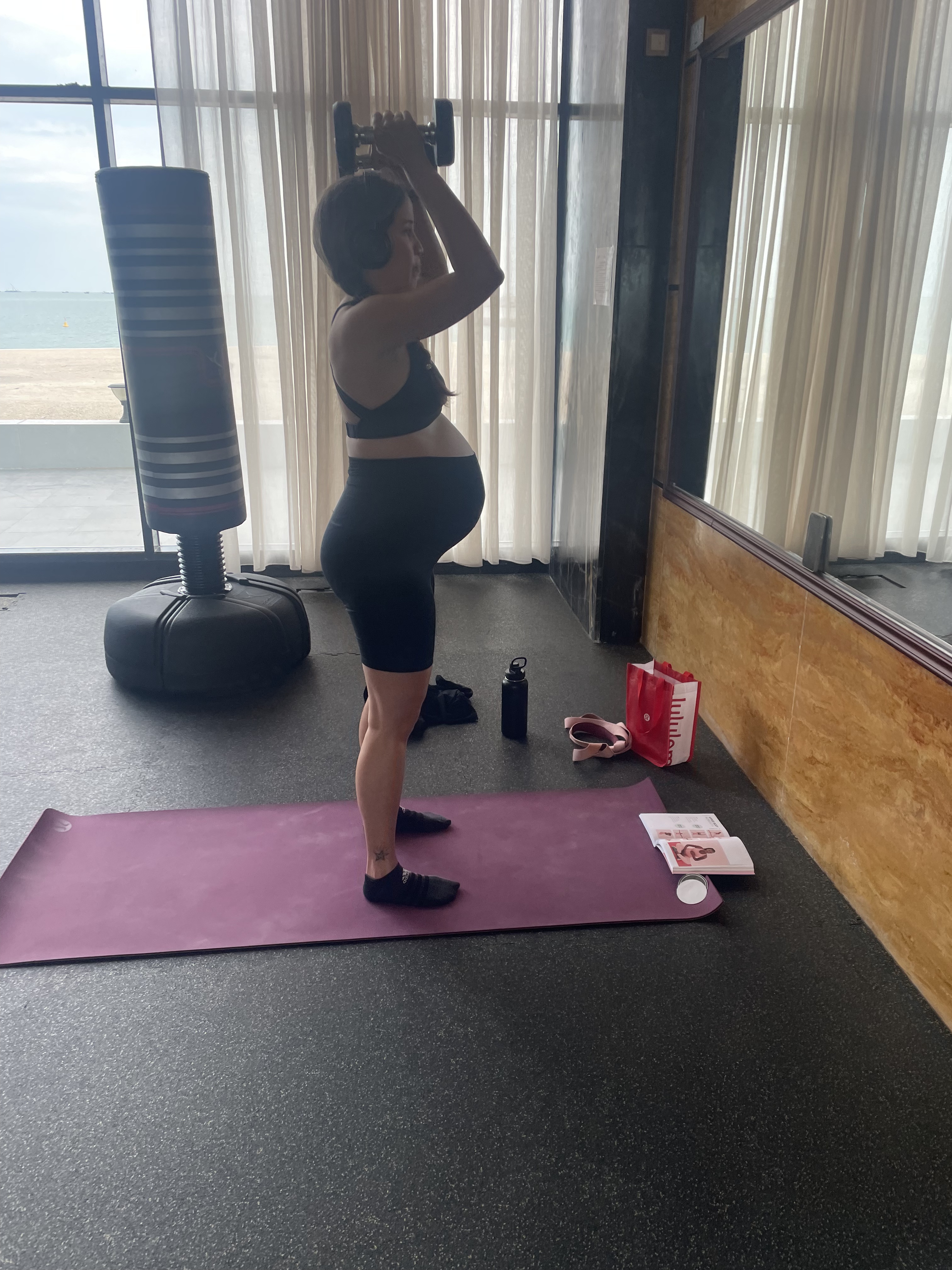
My wife ended up finding a very good book called burpee and bumps. That combined with some of our own exercises and cardio that felt good.
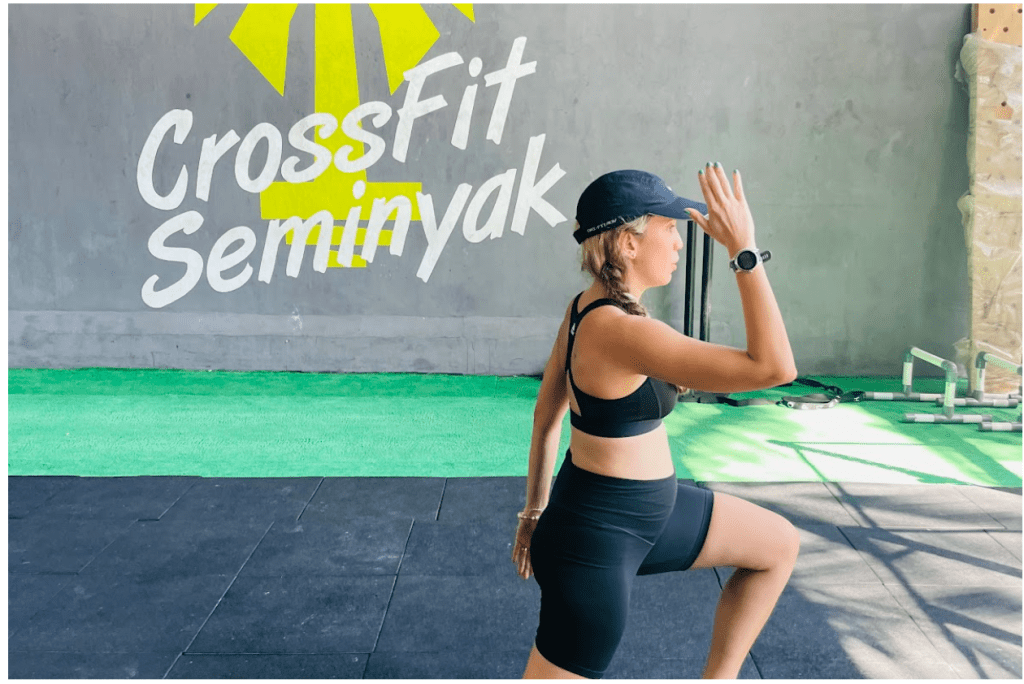
Below are some of the exercises she did. She often selects for example 4 exercises in the below trimester and does 3 rounds. Nothing magic. She often did 10 reps. If she were alternating exercises she did 20 reps. She did one upper body one day and a lower body workout the other day. She started with very light weights and worked her way up. If any doubts contact a specialist with experience in pregnancy training.
1st trimester
- Cardio: Walking, swimming, cycling and what you feel good about.
- Upper body
Alternating shoulder press, single arm overhead triceps extension, plank march, alternating renegade row, biceps curls and overhead press, shoulder press, Kneeling arm raise, Bent over row, Dumbbell front raise, dumbbell chest press, side plank twist, shoulder tap, chest flyes, lateral raise.
- Lower body
Pulsing squat, glute bridge, backward lunge, Lying leg raise, bodyweight squat, side lunge, lying crunch, side plank twist, sumo deadlift, single leg glute bridge, bird dog, balance lunge, 4-point knee raise, romanian deadlift, glute bridge, side plank bridge, sumo squat, static lunge, lying leg crunch, modified burpee, single leg romanian deadlift
- Full body
Squat and press, glute bridge chest press, single bentover row, side plank crunch, modified burpee, lunge and curl, renegade row, shoulder tap, side lunge, frontal and lateral raise, chest press, pulsing squat 3 pulse, backward lunge, bird dog, triceps extension, single leg glute bridge, side plank twist, balance lunge, upright row, 4-point knee raise, press-up and 1 tap each shoulder, sumo squat, upright row, side lunge, narrow shoulder press.
2nd trimester
- Cardio: Walking, swimming, cycling and what you feel good about.
- Upper body
Renegade row, press-up, narrow shoulder press, triceps dip, wide shoulder press, biceps curl, reverse table top dip, belly breathing, curl and press, single bentover row, lateral raise, bird dog, triceps extension, glute bridge chest press, 4-point knee raise, alternating shoulder press, glute bridge chest fly, arm raise, press-up and 1 tap each shoulder, frontal and lateral raise, side plank crunch, plank march
- Lower body
Backward lunge, good morning, glute bridge, bird dog, balance lunge, sumo squat, single glute bridge, side plank twist, sumo deadlift, static side lunge alternating, lying leg cruch, side plank twist, single leg romanian deadlift, shoulder tap, side plank dip, reverse table top dip, lying leg raise, single glute bridge, romanian deadlift, pulsing squat.
- Full body
Squat and press, plank march, static lunge, reverse table top dip, lunge and curl, alternating shoulder press, side lunge, arm raise, press- up 1 and 1 tap each shoulder, single leg bentover row each side, sumo squat, tricep dip, plank march, bird dog, backward lunge, reverse table top dip, press up, side plank twist, glute bridge chest press, arm raise, triceps extension, sumo deadlift
3rd trimester
- Cardio:Walking, swimming, cycling and what you feel good about.
- Upper body
Renegade row, press-up, narrow shoulder press, triceps dip, wide shoulder press, biceps curl, reverse table top dip, belly breathing, curl and press, single bentover row, lateral raise, bird dog, triceps extension, glute bridge chest press, 4-point knee raise, alternating shoulder press, glute bridge chest fly, arm raise, press-up and 1 tap each shoulder, frontal and lateral raise, side plank crunch, plank march
- Lower body
Backward lunge, good morning, glute bridge, bird dog, balance lunge, sumo squat, single glute bridge, side plank twist, sumo deadlift, static side lunge alternating, lying leg cruch, side plank twist, single leg romanian deadlift, shoulder tap, side plank dip, reverse table top dip, lying leg raise, single glute bridge, romanian deadlift, pulsing squat.
- Full body
Squat and press, plank march, static lunge, reverse table top dip, lunge and curl, alternating shoulder press, side lunge, arm raise, press- up 1 and 1 tap each shoulder, single leg bentover row each side, sumo squat, tricep dip, plank march, bird dog, backward lunge, reverse table top dip, press up, side plank twist, glute bridge chest press, arm raise, triceps extension, sumo deadlift



Thanks for the great updated list of do’s and don’ts. In my personal experience the most important is to know yourself and your own body. It should provide you with a good feeling and experience to do exercise. If it hurts or makes you anxious – rethink it, so something else or consult your medic team.
Great job by you and your wife, it seems like she found her way in the jungle of advices
Thank you for such a wonderful and concise review of exercise and pregnancy and more importantly, thank you for sharing it also from a personal aspect. This is very insightful with many useful links to pubmed.
Thanks again.
[…] Physical activity during my wife’s pregnancy – the dad perspective. Link: […]