How I Managed My Wrist Pain and Limited Range of Motion Using the VALD DynaMo
By Andreas Bjerregaard, MSc, Sports Physiotherapist
(This blogpost is created with improvement from AI).
As physiotherapists, we spend a lot of time telling our patients to “listen to their bodies.” But what do you do when your own body suddenly starts giving you answers you can’t explain? At the end of May, I developed pain in my wrist. It became swollen and painful, and my range of motion was significantly limited.
The Symptoms
The first thing I noticed was swelling around my wrist. Soon after, my range of motion became restricted in almost every direction. My grip strength also decreased.
The movements most affected were:
- Wrist extension
- Wrist flexion
- Radial deviation
- Ulnar deviation
- Forearm supination
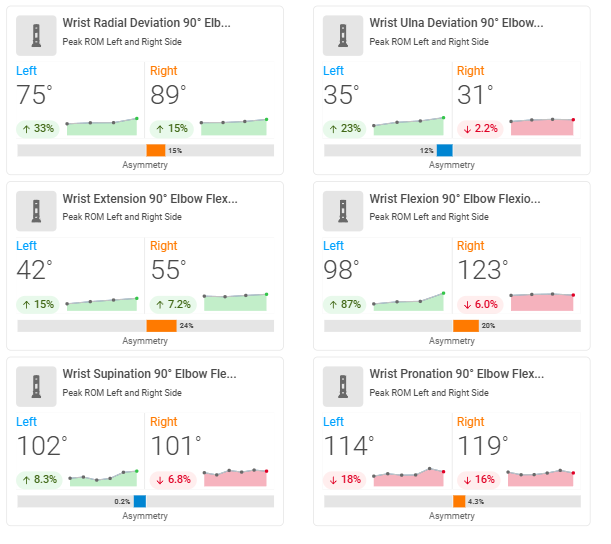
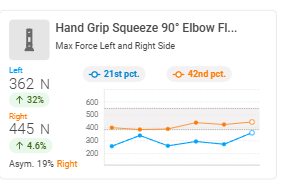
Measuring Instead of Guessing
Using the VALD DynaMo Plus, I began tracking both wrist range of motion and strength with standardized testing protocols.
Find the test protocols here: VALD Wrist Range of motion
Having objective numbers changes the conversation. Instead of saying, “It feels a little better today,” I could say, “I’ve regained 10 degrees of wrist extension,” or “My grip strength is improving, but radial deviation strength remains my biggest deficit.” That made it easier to target my exercises.
Testing Made My Symptoms Worse
After recognising that constant testing was aggravating my symptoms, I changed strategy. For the next couple of weeks, I focused on protecting the wrist rather than provoking it. That included wearing a wrist support to avoid repeatedly moving into painful end-range positions and allowing the irritated tissues to settle. After a week to 10 days, I started tracking again with less frequent testing. Used alongside good clinical reasoning and a progressive loading programme, objective testing can help guide smarter rehabilitation decisions.
Summaries
Find a physiotherapist that can help you with objective testing.
Here are some wrist exercises