Eccentric Utilization Ratio (EUR)
By Andreas Bjerregaard, MSc, Sports Physiotherapist
(This blog post was created with input from AI.)
Two athletes can jump exactly the same height, yet use completely different movement strategies to get there.
One simple way to explore those differences is the Eccentric Utilization Ratio (EUR).
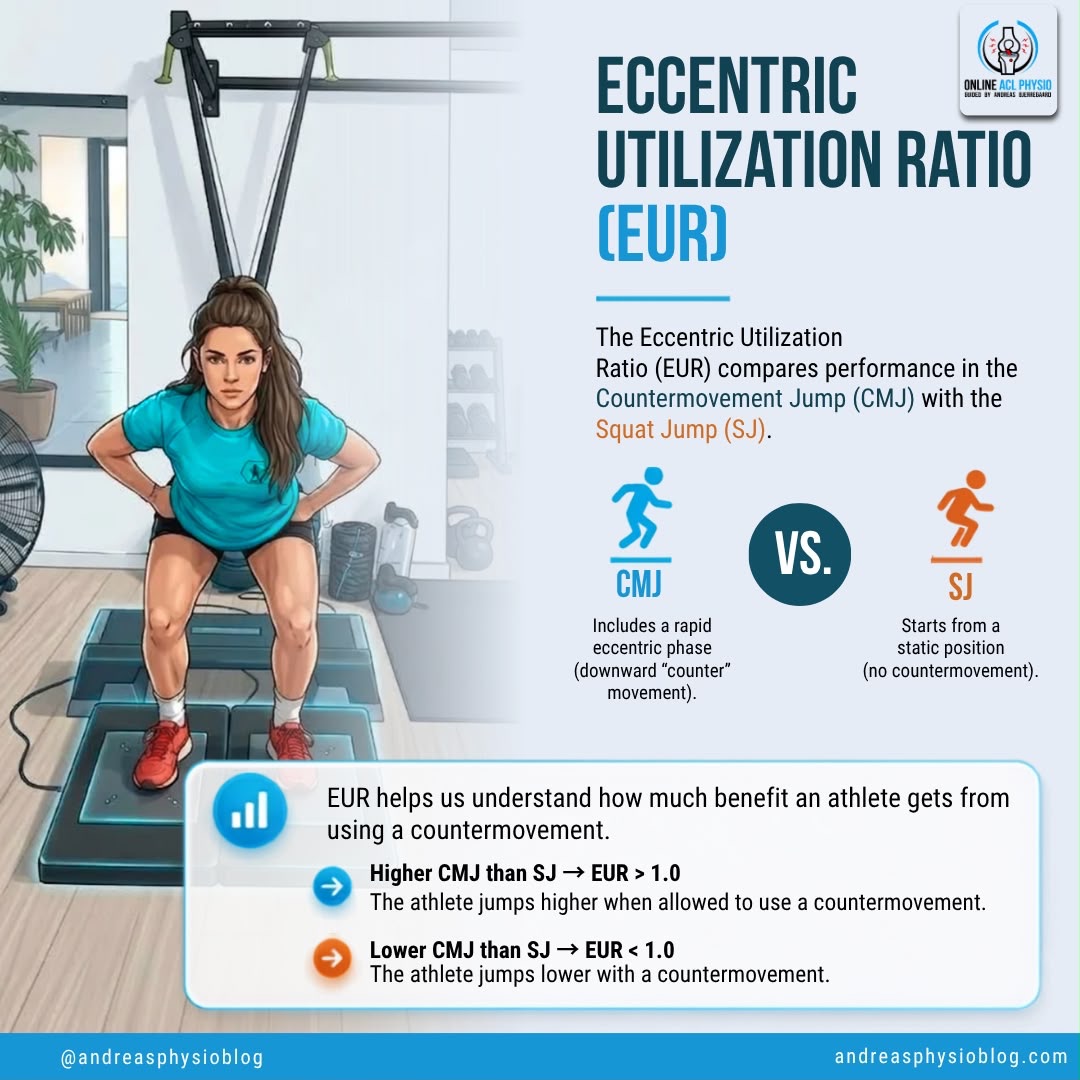
The EUR compares performance in the Countermovement Jump (CMJ) with the Squat Jump (SJ). “How did the athlete produce that jump?”
Formula: EUR = CMJ ÷ SJ
Because the Countermovement Jump includes a rapid eccentric (unweighted downward) movement before take-off, while the Squat Jump starts from a static position, the CMJ is usually slightly higher.
Example 1
- Squat Jump = 30 cm
- Countermovement Jump = 33 cm
EUR = 33 ÷ 30 = 1.10
This means the athlete’s CMJ height was 10% greater than the SJ height.
Example 2
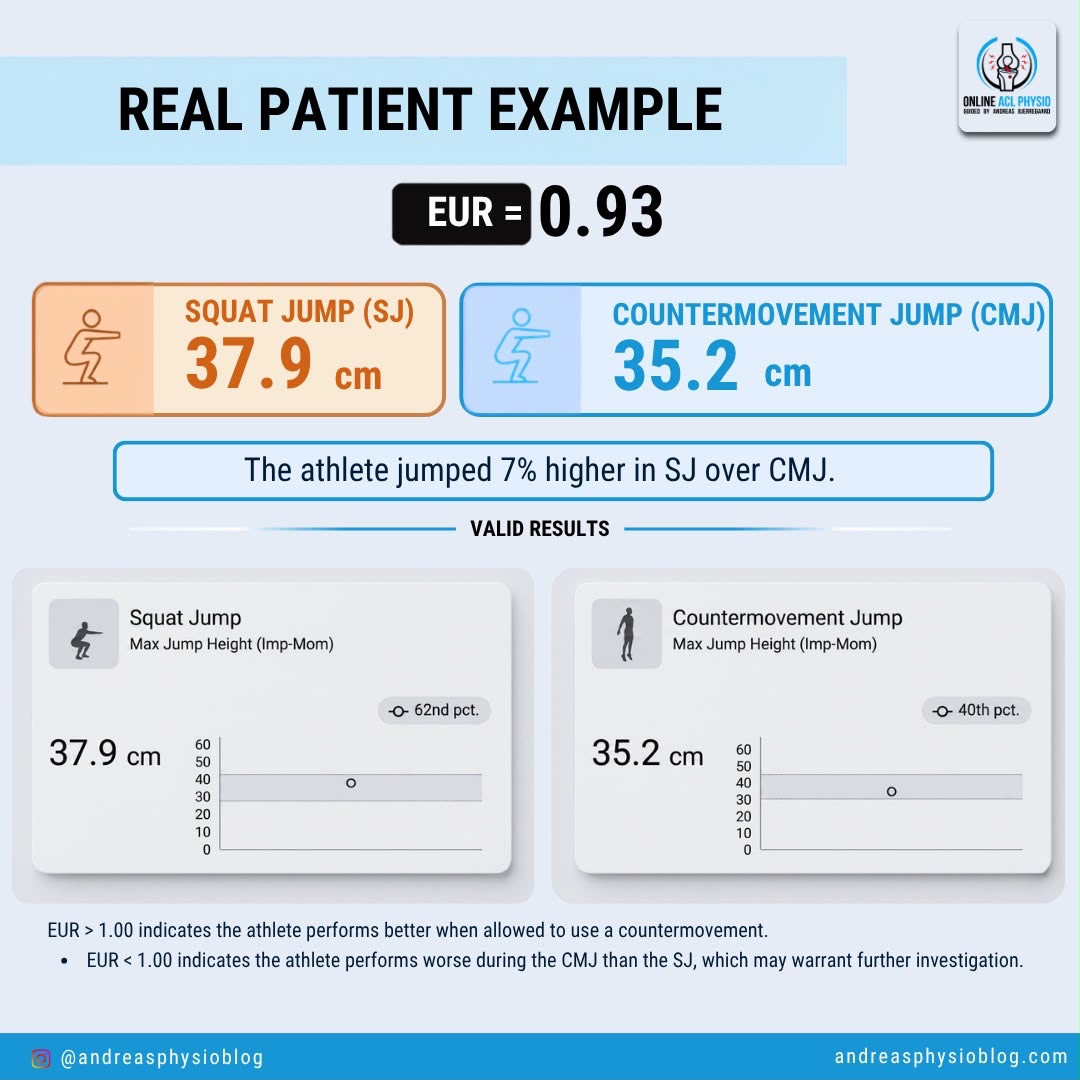
One of my rehabilitation patients demonstrated:
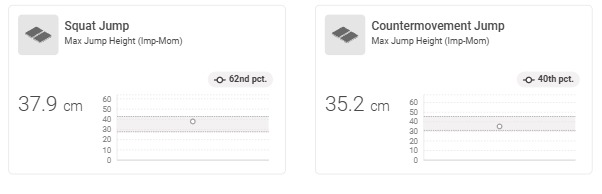
Squat Jump (SJ)

Countermovement Jump (CMJ)
- Squat Jump = 37.9 cm
- Countermovement Jump = 35.2 cm
EUR = 35.2 ÷ 37.9 = 0.93
This means the athlete actually jumped approximately 7% lower during the Countermovement Jump than during the Squat Jump.
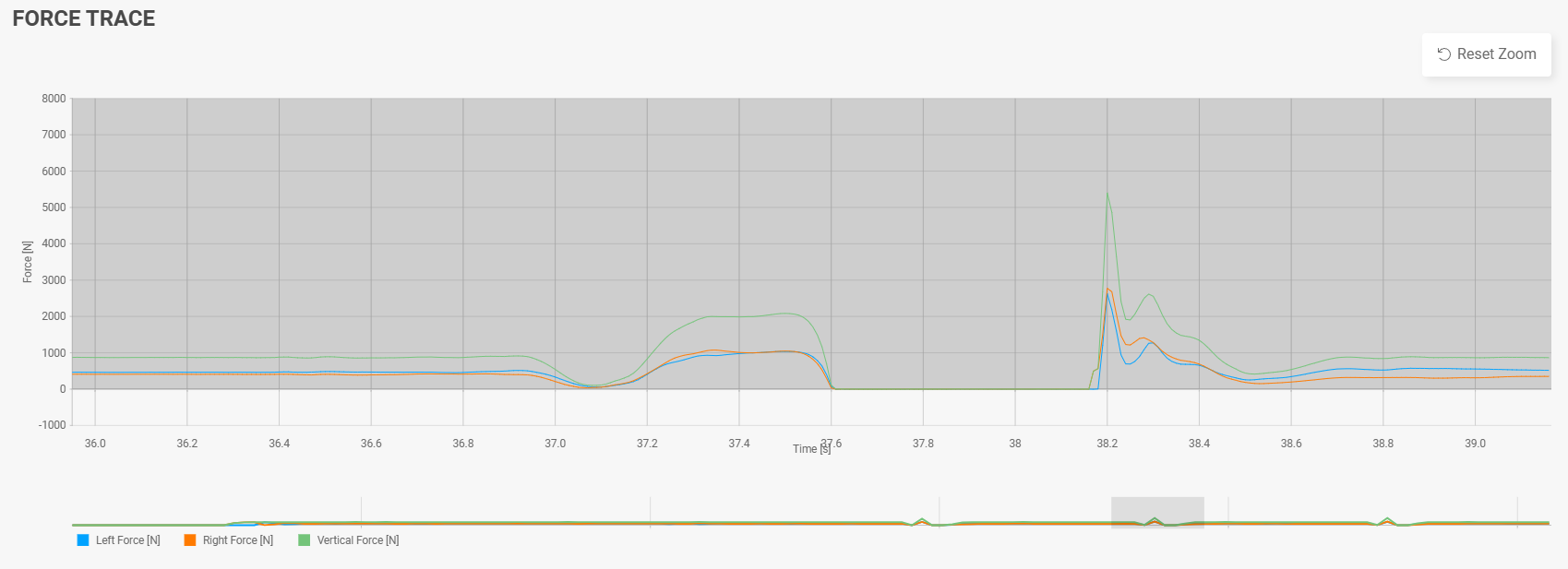
My interpretation is that he is not utilising the eccentric part (stretch-shortening cycle (SSC)) of his CMJ. My exercises will now be targeting eccentric impulse.
Instead of just saying EUR is GOOD or BAD, I use the ratio to guide my exercises.
Why is the CMJ usually higher?
The traditional explanation is that the rapid eccentric movement stores elastic energy within the muscle-tendon unit, which can then contribute to greater force and power during take-off.
However, more recent research suggests the explanation is more complex.
A countermovement allows the athlete to:
- Generate force before the propulsive phase begins
- Benefit from elastic energy stored within the muscle-tendon unit
The stretch-shortening cycle certainly contributes to the difference between the CMJ and SJ, but it is unlikely to be the only explanation. Recent biomechanical research suggests that improvements in CMJ performance are also influenced by movement strategy, force development, tendon properties, and neuromuscular coordination.
How should we interpret the EUR?
In general:
- EUR > 1.00 indicates the athlete performs better when allowed to use a countermovement.
- EUR ≈ 1.00 suggests little difference between the two jumping strategies.
- EUR < 1.00 indicates the athlete performs worse during the CMJ than the SJ and may warrant further investigation.
However, the EUR should never be interpreted in isolation. A large EUR may also simply reflect relatively poor Squat Jump performance rather than exceptional Countermovement Jump performance. Likewise, a low EUR does not automatically indicate poor athletic ability.
The EUR should therefore be interpreted alongside other performance metrics
How I use the EUR clinically
I do not use the EUR as a pass-or-fail criterion. Instead, I use it to start a clinical conversation.
The question is not:
“Is this EUR good?”
The question is:
“Why is this athlete performing differently between the Countermovement Jump and the Squat Jump?”
Key Take-Home Message
The Eccentric Utilization Ratio compares performance in the Countermovement Jump (CMJ) with the Squat Jump (SJ).
Rather than viewing it as a score to pass or fail, I see it as a tool that helps guide further assessment and rehabilitation plan.
The real value of the EUR does not come from the number itself. It comes from understanding why an athlete performs differently between the Countermovement Jump and the Squat Jump and using that information to individualise rehabilitation or performance training.